
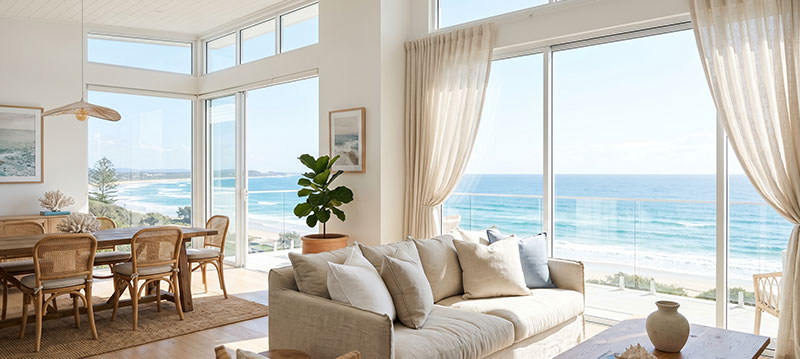
Sunshine Coast homes bask in nearly 300 days of sunshine a year, making your window coverings more than a design choice.
In Queensland’s intense UV and high-salt environment, the right fabric and colour are critical for managing heat, preserving your furniture, and maintaining the “Coastal Modern” aesthetic.
Well-selected window coverings can reduce heat gain through glass by up to 87%. In suburbs from Noosa to Caloundra, high-performance textiles are balancing thermal efficiency with soft, beach-inspired textures.
In this guide, we explore the trending textures and colour palettes currently defining Sunshine Coast interiors. Backed by iQ Shutters’ local manufacturing expertise and 15-year warranties, we’ll help you identify which window furnishings offer the best balance of luxury style and Queensland-tough performance.
|
Sunshine Coast Colour and Fabric Trends
Soft Coastal Neutrals
Soft neutral tones remain a favourite throughout Sunshine Coast homes because they reflect light and complement relaxed coastal interiors.
Shades such as warm white, sand, ivory, and pale beige blend effortlessly with timber flooring, light cabinetry, and natural stone commonly found in modern Queensland residences.
Homes positioned close to the shoreline often favour lighter shades because they help reduce glare from strong sunlight while maintaining a bright interior atmosphere.
Neutral palettes also allow other design elements—such as furniture, artwork, or flooring—to stand out without overwhelming a space.
Benefits
- Reflects sunlight and reduces heat absorption
- Creates calm, airy interiors suited to coastal homes
- Matches most architectural styles and colour schemes
- Maintains a timeless appearance even as décor trends change
Achieving this look typically involves selecting light-filtering fabrics or blockout materials in warm neutral tones.
Many homeowners exploring interior solutions like roller blinds find that these tones maintain consistency across open-plan living spaces while keeping rooms visually spacious.
Coastal Greys and Driftwood Tones
Subtle grey hues inspired by driftwood and coastal stone have grown increasingly popular in contemporary Sunshine Coast homes.
These shades introduce depth without darkening interiors, making them ideal for large windows and sliding doors facing outdoor living areas.
Grey palettes pair beautifully with brushed aluminium finishes, stone benchtops, and matte cabinetry. Such combinations create a modern coastal aesthetic that feels sophisticated while remaining relaxed.
Benefits
- Adds modern style without overpowering interiors
- Conceals minor dust or marks better than pure white
- Complements popular finishes like concrete, stone, and timber
- Works well in both contemporary and traditional homes
Homeowners can incorporate these tones through textured fabrics or subtle woven finishes. When paired with automated options from solutions like motorised roller blinds, coastal grey shades provide both visual elegance and convenient daily operation.
Textured Linen-Style Fabrics
Natural-looking textiles inspired by linen remain highly desirable across the Sunshine Coast. These fabrics introduce visual depth without heavy patterns, helping interiors feel warm yet refined.
Unlike flat synthetic materials, linen-inspired weaves scatter light gently, softening glare while maintaining brightness throughout a room.
This feature proves particularly valuable in homes with large glazing areas overlooking beaches, hinterland landscapes, or outdoor entertaining zones.
Benefits
- Softens sunlight while maintaining natural brightness
- Adds subtle texture that elevates interior design
- Blends beautifully with timber, stone, and rattan décor
- Creates relaxed coastal styling suitable for Queensland homes
Many homeowners combine linen-style fabrics with sheer curtains or layered window furnishings for greater light flexibility.
Light-Filtering Sunscreen Weaves
Sunshine Coast homes often feature expansive glazing designed to maximise outdoor views. Light-filtering sunscreen fabrics offer an effective solution for managing brightness while preserving visibility toward gardens, decks, or ocean horizons.
These technical fabrics incorporate woven fibres that reduce glare and UV penetration while allowing outward visibility.
Government guidance from the Australian Radiation Protection and Nuclear Safety Agency highlights that effective shading significantly reduces indoor UV exposure, improving comfort and protecting furnishings.
Benefits
- Reduces glare without blocking views
- Helps limit UV exposure inside living areas
- Maintains daylight while protecting furniture and flooring
- Supports energy efficiency by lowering solar heat gain
Such fabrics work particularly well in living rooms, kitchens, and home offices where outdoor views enhance lifestyle, but glare could otherwise disrupt daily activities.
Warm Earth Tones for Statement Spaces
While neutral shades dominate many homes, warm earth tones have gained popularity in selected areas such as bedrooms, studies, or media rooms.
Colours like terracotta, clay, and muted olive add richness while maintaining a connection to coastal landscapes.
Designers often recommend introducing stronger colours selectively so living areas remain bright and airy while certain rooms develop a cosy atmosphere.
Benefits
- Creates warmth and visual interest within interiors
- Works beautifully alongside timber flooring and natural materials
- Adds personality without overwhelming open-plan spaces
- Helps darker rooms feel more intimate and comfortable
Earth-toned fabrics perform especially well in rooms designed for relaxation or reduced brightness, such as bedrooms or theatre areas.
Smart Design Decisions for Sunshine Coast Window Coverings
Coastal Sunlight and UV Exposure
Sunshine Coast homes receive intense sunlight throughout the year, with Queensland recording some of the highest ultraviolet levels globally.
Prolonged exposure to direct sunlight gradually fades textiles and finishes, making UV resistance an essential consideration during the selection process.
Industry guidelines note that all fabrics experience fading over time when exposed to sunlight, particularly if materials receive uneven daylight exposure throughout the day.
Rooms facing north or west generally receive stronger afternoon sun, which means lighter shades and reflective fabrics perform better in these spaces.
Bright neutrals, sunscreen weaves, and light-filtering materials help soften glare while reducing heat gain. Choosing UV-stable fabrics designed for Australian conditions ensures window furnishings maintain colour consistency longer in coastal environments.
Interior Design Style and Colour Harmony
Colour choices should complement surrounding architectural features and décor elements. Flooring, cabinetry, wall paint, and furniture fabrics all influence which shades will integrate naturally within the overall design scheme.
A carefully chosen palette helps maintain a balanced interior where window furnishings feel intentional rather than visually separate.
Neutral shades often suit open-plan coastal homes because they connect multiple living areas without creating abrupt visual transitions.
For rooms where personality matters more—such as bedrooms or studies—slightly deeper tones may introduce warmth while still maintaining harmony with surrounding materials.
Light Control and Privacy Needs
Every household uses living spaces differently, so light management requirements vary between rooms. Kitchens and living areas often benefit from filtered daylight that preserves outdoor views while reducing glare.
Bedrooms, media rooms, or nurseries may require stronger light reduction to support sleep or entertainment.
Balancing privacy with brightness becomes particularly important in dense coastal suburbs. Fabric openness factors and material thickness influence how much light enters a space while controlling visibility from outside.
When evaluating options such as blinds, homeowners should consider both daytime glare control and evening privacy requirements before finalising fabric selection.
Moisture, Humidity, and Salt Air
Ocean proximity brings increased humidity and airborne salt particles that can affect interior materials over time.
Fabrics designed for coastal regions typically incorporate synthetic fibres or treated coatings that resist moisture absorption and reduce mould risk.
Homes located near beaches or estuaries benefit from materials that maintain structural stability despite fluctuating humidity levels.
Durable fabrics paired with corrosion-resistant hardware help ensure long-term reliability, particularly in spaces with large sliding doors or windows exposed to outdoor breezes.
Long-Term Maintenance and Durability
Maintenance expectations also influence which textures and colours suit a particular household. Light fabrics may highlight dust or marks more easily, whereas mid-tone colours often conceal everyday wear more effectively.
Ease of cleaning should remain a priority when selecting materials for family homes. Many modern textiles feature coatings that repel dust and allow gentle cleaning with minimal effort.
Evaluating durability alongside aesthetics helps ensure that selected window furnishings remain practical for daily living while preserving a refined appearance.
Key Takeaways
Coastal sunlight, humidity, and relaxed architectural styles all influence which materials and tones perform best inside your home.
When narrowing down your final choice, keep the following key considerations in mind:
- Sun exposure matters – UV-resistant fabrics help maintain colour consistency in Queensland’s intense sunlight.
- Colour should complement interior design – Neutral tones create versatility, while deeper shades add warmth to selected spaces.
- Light control varies between rooms – Living areas benefit from filtered daylight, whereas bedrooms may require stronger blockout options.
- Coastal conditions affect durability – Materials suited to humidity and salt air last longer near the ocean.
- Maintenance should suit your lifestyle – Easy-care fabrics help maintain a clean, polished appearance with minimal effort.
Every home along the Sunshine Coast presents unique design goals, window sizes, and lighting conditions. Consulting an experienced specialist helps ensure that colour selection, fabric choice, and installation style work together seamlessly.
Get Expert Guidance for the Perfect Coastal Window Style
At iQ Shutters, we bring over 15 years of local expertise to every home from Noosa to Caloundra.
As a family-owned business, we don’t just supply blinds; we engineer coastal light-control solutions. By prioritising high-performance textiles and locally manufactured aluminum — backed by up to 25-year warranties — we ensure your investment remains as vibrant as the day it was installed.
Ready to transform your living space? Contact iQ Shutters today for a free measure and quote within 24 hours.