
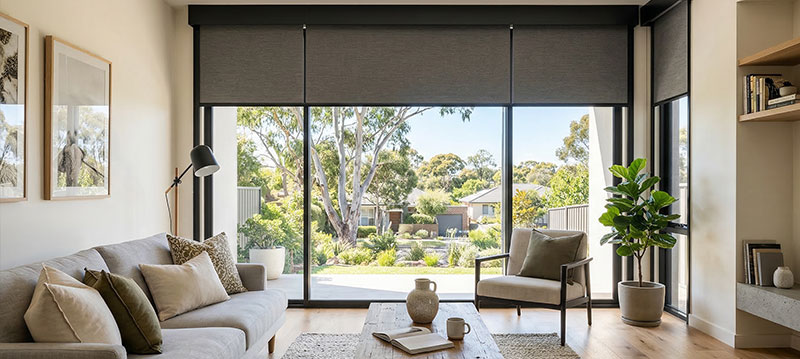
Sunshine Coast light is world-class until it’s 6:00 AM and a glare battle is erupting in your bedroom.
While window furnishings are the first line of defense, performance issues rarely come down to the fabric alone. In reality, the difference between a room that’s mostly dark and one that’s properly blocked out lies in the finishing details.
Across coastal homes, growing interest surrounds add-ons such as pelmets and side channels, especially among homeowners upgrading roller blinds for better blockout, cleaner lines, and improved insulation.
Often dismissed as add-ons during the quoting process, these upgrades are the secret to solving the light bleed and heat transfer that standard roller blinds can’t handle.
In a climate defined by harsh light angles, salt-laden winds, and intense humidity, understanding these options is the difference between a stylish interior and a functional sanctuary.
This guide breaks down exactly how these finishes work to:
- Seal the Gaps: Why side channels are non-negotiable for media rooms and shift workers.
- Boost Insulation: How pelmets create a thermal barrier that keeps your air conditioning inside.
- Protect Your Investment: Why enclosing your roller blinds shields the mechanism from the corrosive Sunshine Coast salt air.
- Refine the Aesthetic: Moving beyond exposed brackets for a sleek, architectural finish.
By the end of this article, you’ll know exactly which configurations suit your lifestyle, ensuring you don’t pay for “extra” features unless they provide a genuine payoff for your home.
|
Smart Window Finishing Details That Change How Blinds Perform
For those installing made-to-measure blinds, there are three primary ways to elevate a standard roller blind from a simple shade to a high-performance system:
- Pelmets: These conceal the top hardware and brackets, creating a sleek, built-in look while blocking the “light halo” that typically leaks from the top of the roll.
- Side Channels: These vertical guides lock the fabric edges in place. They are the gold standard for total light blockout and prevent blinds from “clattering” against the frame in the coastal breeze.
- Combined Systems: For media rooms or master bedrooms, combining a pelmet with side channels creates a sealed unit for maximum insulation and darkness.
Key Benefits for Coastal Homeowners
- Superior Climate Control: By reducing air movement between the blind and the glass, these additions act as a thermal barrier against the Queensland heat.
- Acoustic Dampening: Sealing the gaps helps soften outside noise from street traffic or coastal winds.
- Hardware Protection: Enclosing the roller mechanism helps shield it from the corrosive effects of salt air, extending the life of your investment.
While these additions offer significant upgrades, they do require professional precision. Side channels need perfect alignment to prevent the fabric from jamming, and pelmets require adequate “reveal depth” to sit flush. Choosing the right configuration ensures your blinds feel like a seamless part of your home’s design rather than a tacked-on afterthought.
When Pelmets or Side Channels Truly Improve Performance
Both upgrades address different weaknesses seen during real installations, so the choice hinges on which issue matters most.
Pelmets improve performance by controlling light leakage from above while creating a sealed top edge. This option proves effective where harsh morning sun spills over fabric rolls, especially across east-facing bedrooms.
Side channels improve performance by controlling light seepage along edges while stabilising fabric movement. Coastal breezes frequently cause fabric sway, leading to noise, uneven edges, and increased wear.
| Performance Area | Pelmets | Side Channels |
| Top light control | Excellent | Moderate |
| Side light control | Limited | Excellent |
| Fabric stability | Minimal impact | High impact |
| Visual finish | Clean, concealed | Structured, architectural |
| Installation precision | Moderate | High |
| Coastal wind handling | Minimal | Strong |
Outdoor openings sometimes suit a different approach altogether, especially where breezes and sun hit hard, so comparing indoor systems with external blinds can clarify what belongs inside versus outside.
Planning Details That Prevent Expensive Adjustments Later
Site Conditions Influence Performance
Sunshine Coast homes face strong UV exposure, shifting coastal winds, and salty air. Window orientation changes how light enters rooms across seasons. North-facing glazing receives consistent sun, while eastern openings catch sharp morning glare.
Wind-exposed elevations often experience fabric movement that open systems struggle to manage. Assessing these factors early avoids underperforming installations that look fine on paper yet disappoint in daily use.
Homes dealing with tricky angles, bay windows, or oversized openings usually benefit from guidance on hardware choices, which is covered well in this guide for bay, corner, or oversized windows.
Opening Sizes and Structural Constraints
Window dimensions directly affect suitability. Wider spans increase fabric deflection, especially without side guidance. Deeper reveals allow pelmets without visual bulk, while shallow frames may require face mounting.
Large sliding doors demand additional fixing points, reinforcing frames when required. Measuring beyond glass size matters, including architraves, cornices, handles, plus clearance for smooth operation.
Building Rules and Body Corporate Requirements
Internal shading usually avoids formal approvals, though apartments or townhouses under body corporate rules may impose restrictions. Some strata schemes require approval for visible fittings, colours, and drilling locations.
Room-Specific Usage Expectations
Bedrooms and Nurseries
Blockout performance matters most here. Light bleed tolerance stays low, particularly for shift workers or young families. Combining finishing elements often delivers noticeable comfort improvements.
Media Rooms and Home Offices
Glare control and acoustic reduction carry higher priority. Side containment improves screen visibility during daylight hours while reducing outside noise intrusion.
Living Areas and Kitchens
Ease of cleaning, airflow, and flexibility take precedence. Pelmets may add visual refinement, while channels suit tall openings exposed to afternoon breezes.
Installer Experience and Quoting Accuracy
Accurate recommendations rely on trade knowledge rather than catalogue selections. Installers assess wall substrates, ceiling types, fixings, and access requirements.
Product Compatibility and System Selection
Not every system supports add-ons equally. Certain roller blinds integrate channels seamlessly, while others require custom adaptation. Fabric weight, hem bar design, and hardware profiles influence performance once enclosed.
Mistakes We See Too Often
Underestimating Measurement Accuracy
Installations regularly fail to meet expectations because measurements stop at glass width rather than the full opening context. Trim profiles, handles, reveals, and ceiling lines frequently get overlooked.
Even minor miscalculations create light bleed, uneven drops, and noisy movement. These issues rarely show up on install day but appear weeks later once daily use begins.
Assuming One Solution Fits Every Window
Homes across the Sunshine Coast feature varied orientations, elevations, and exposure levels. Applying identical configurations throughout a property often leads to disappointment.
Bedrooms, living zones, and stairwells behave differently under sun angles and wind. Treating every opening the same sacrifices performance for convenience.
Choosing Materials Unsuitable for Coastal Conditions
Salt air accelerates corrosion on inferior components. Lightweight plastics warp under heat. Incompatible finishes fade prematurely. Many fixes involve replacing parts that were never suited to coastal living. Material selection must reflect the local environment, not showroom lighting.
Hardware and Fixings
Non-stainless fasteners rust quickly near shoreline locations. Once corrosion sets in, stability drops and movement increases.
Skipping Body Corporate or Approval Checks
Apartment residents sometimes assume internal fittings bypass approvals entirely. Strata by-laws often restrict visible changes, drilling zones, and colour selections. Jobs stall once complaints surface. Early checks save time, money, and awkward conversations later.
Ignoring Manufacturer Guidelines
Instructions exist for a reason. Fabric widths, drop limits, and fixing spacings matter. Deviating from guidelines increases wear, noise, and premature failure. Many callouts involve correcting shortcuts taken during initial installs rather than genuine defects.
Prioritising Price Over Long-Term Outcome
Budget-driven decisions sometimes sacrifice performance features that cost little upfront yet deliver lasting comfort. Homeowners later request upgrades after experiencing daily frustration. Fixing completed installs costs more than planning correctly from the start.
How Pelmets or Side Channels Compare
Pelmets or Side Channels vs. Standard Open Install
Standard open installs remain common due to lower upfront cost and faster fitting. Performance differences become obvious once daily use begins.
| Aspect | Open Install | With Pelmets / Side Channels |
| Light control | Basic | Significantly improved |
| Visual finish | Functional | Built-in appearance |
| Fabric stability | Variable | Consistent |
| Insulation | Minimal | Noticeable |
| Coastal wind handling | Limited | Strong |
Open designs suit low-priority areas such as laundries or secondary spaces. Enhanced systems suit rooms where comfort matters.
Enhanced Systems vs. DIY Add-Ons
Some homeowners attempt aftermarket solutions or self-installed trims. Results vary widely.
- DIY approaches often lack precision
- Seal quality usually remains inconsistent
- Warranty coverage frequently becomes void
- Long-term durability drops under coastal exposure
Professional installs deliver predictable outcomes due to correct tolerances, materials, and fixings.
Pelmets Compared With Side Channels
Each option targets different performance gaps rather than competing directly.
- Pelmets address overhead light leakage and visual concealment
- Side channels control edge gaps and fabric movement
- Combined use maximises blockout and stability
Selection depends on which issue dominates the room behaviour.
Fabric Weight vs. Guidance Systems
Heavier fabrics reduce light bleed naturally but increase movement under wind. Guidance systems control movement regardless of fabric choice.
- Heavy fabric without guidance: reduced glare, increased sway
- Lighter fabric with guidance: stable operation, consistent edges
Understanding this trade-off prevents mismatched combinations.
Key Takeaways
- Pelmets reduce top light bleed while improving visual finish
- Side channels control edge gaps, fabric movement, and noise
- Coastal wind and sun angles strongly influence outcomes
- Measurement accuracy determines long-term satisfaction
- Material choice matters more near salt-heavy environments
- Combining both features often delivers the best results
Every home behaves differently once sunlight, wind, and privacy needs come into play. Bedrooms, media rooms, and living areas rarely share identical requirements. Rushing decisions based on price alone often lead to costly adjustments later.
Before committing, consider how each space functions day to day, then speak with a specialist who understands local conditions, construction nuances, and performance trade-offs.
Get Expert Guidance Before Making Your Final Choice
On the Sunshine Coast, every home faces a unique combination of salt air, shifting sun paths, and afternoon heat. Getting the configuration right doesn’t just improve your home’s look—it fundamentally changes how you live in it.
At iQ Shutters, we’ve spent over 15 years helping local homeowners navigate these choices. Whether you need a total blackout for a media room or a thermal barrier to slash your cooling costs, we ensure your window furnishings are as functional as they are beautiful.
Reach out to the iQ Shutters team today for personalised guidance or a fast, obligation-free quote.