
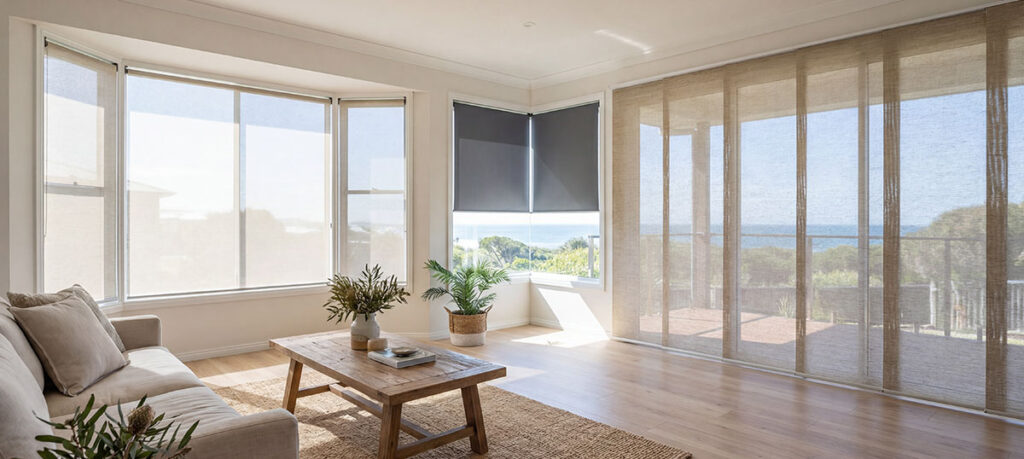
Oversized glazing brings instant architectural drama to a home, but managing light, heat, and privacy across such vast spans is a significant challenge.
On the Sunshine Coast, where intense sun and coastal glare are part of daily life, the wrong window coverings can quickly turn a stunning glass feature into a source of discomfort and heat gain.
Many homeowners find that standard, off-the-shelf blinds simply aren’t built for the technical demands of bay windows, corner joins, or floor-to-ceiling glass. These unique spaces require careful consideration of fabric tension, wind exposure, and how much “stacking space” is needed to keep your view unobstructed.
In this guide, we break down how to master your home’s most challenging windows, covering:
- Bay & Corner Solutions: How to achieve a seamless look without unsightly gaps in coverage.
- Managing Scale: Selecting the right mounting methods and control systems for heavy, oversized blinds.
- Coastal Durability: Choosing materials that can withstand salt air and high UV levels without fading or failing.
- Motorisation & Automation: Why smart controls are a game-changer for hard-to-reach or expansive windows.
By the end of this guide, you’ll have the clarity to choose a custom solution that enhances your home’s architecture while providing total climate and privacy control.
Smart Light Control for Expansive Glass Features
In modern Sunshine Coast homes, oversized or unusually shaped windows are architectural highlights, but they require a strategic approach to light and heat control. Custom blinds offer a versatile, low-profile solution that manages glare without cluttering your design.
Here is why custom blinds are the ideal choice for complex glazing:
- Precision Control: Unlike heavy curtains, blinds allow you to fine-tune privacy and light at different times of the day, which is essential for managing the harsh Queensland sun.
- Architectural Continuity: Minimalist hardware and slim stacking ensure that when the blinds are open, your view remains unobstructed and your window’s geometry stays front and center.
- Climate & Fabric Performance: By selecting the right “openness factor” and UV-stable fabrics, you can significantly reduce solar heat gain and protect your furniture from fading in the coastal light.
- Seamless Integration: Custom configurations allow blinds to meet perfectly in corners or follow the angles of a bay window, eliminating the awkward gaps found in standard retail options.
By matching the mounting style and material to your specific window layout, you transform a challenging glass span into a functional, climate-controlled feature of your home.
Matching Window Solutions to Your Real-World Needs
Understanding Household Priorities Before Selection
Every property presents unique demands, making early assessment essential before choosing this kind of setup. Start by evaluating how each space functions day to day.
Living zones often prioritise glare reduction, temperature moderation, and visual flow, while bedrooms require privacy, light control, and noise buffering. Kitchens, stairwells, and corner lounges introduce further considerations around moisture, access, and safety.
Sun orientation influences performance expectations. North-facing glazing benefits from heat moderation, whereas western exposures require stronger afternoon protection. Oversized spans magnify these effects, increasing the importance of careful planning.
Lifestyle factors also matter; households with children or pets may favour robust mechanisms, easy operation, low-maintenance finishes that withstand frequent handling.
Measuring, Layout, and Structural Realities
Accurate measurements form the foundation for successful outcomes. Bays, angled joins, and wraparound glass demand precision beyond basic width and drop.
Corners often require coordinated movement across adjacent panels, while deep reveals and shallow frames influence mounting choices. Incorrect assumptions during the early stages frequently lead to compromised operation or visual imbalance.
Key Components That Shape Successful Large-Window Solutions
Covering Materials Designed for Wide Spans
At the heart of any effective installation sits the covering material itself. For expansive openings, blinds work best when fabrics or slats maintain stability across the width without sagging or distortion. High-quality textiles engineered for broad spans resist UV degradation, reduce glare evenly, and maintain colour integrity under intense Sunshine Coast sunlight.
Aluminium-based options offer strength, moisture resistance, and suitability for coastal air, while technical fabrics provide softness with controlled light diffusion.
Operating Systems and Control Mechanisms
Smooth, reliable operation becomes critical once window sizes increase. Control systems must manage weight, width, and repeated use without strain. Manual chain drives, spring-assisted systems, and motorised options each suit different households, budgets, and accessibility needs.
Compatibility With Oversized Applications
For wide expanses, reinforced tubes, heavy-duty tracks, and multi-link systems distribute load evenly, preventing premature wear. Motorised drives rated for larger spans offer quieter performance, reduced effort, and consistent alignment across panels. When evaluating options, always confirm weight limits and span ratings rather than relying on appearance alone.
Mounting Hardware and Structural Supports
Behind clean finishes lies robust hardware anchoring everything securely. Brackets, headboxes, pelmets, and tracks require corrosion-resistant construction, particularly near the coastline. Stainless steel fixings, powder-coated aluminium components outperform mild steel alternatives prone to rust.
Finishes, Accessories and Visual Integration
Beyond core mechanics, finishing elements influence the final result. Pelmets conceal hardware while improving light control. Side channels reduce gaps on wide openings, improving blockout and thermal performance. Decorative fascias help integrate systems with interior design themes.
Colour Matching and Customisation
Powder-coated hardware matched to window frames, wall tones create a cohesive appearance. Local suppliers frequently offer custom colour services, enabling precise matching rather than closest-available compromises.
How Much Will Blinds Cost?
| Cost Component | What This Covers | Typical Budget Share |
| Materials | Fabrics, slats, hardware, tracks, finishes | 40–55% |
| Operating Systems | Manual mechanisms, motorisation, controls | 10–20% |
| Custom Fabrication | Angles, bays, corner solutions, and reinforcements | 10–15% |
| Installation Labour | Fitting, alignment, testing, and clean-up | 15–25% |
| Access & Compliance | Scaffolding, certifications, approvals | 0–10% |
Key Takeaways
Selecting solutions for bay, corner, and oversized glazing requires careful thinking, informed decisions, and trusted guidance. Here are the key lessons from this guide:
- Early planning around orientation, usage patterns, and structure prevents functional compromises later
- Material choice influences durability, energy performance, and visual harmony across wide spans
- Accurate measuring, correct hardware, and compatible operating systems ensure smooth operation
- Safety awareness during installation reduces injury risk while preserving long-term performance
- Sensible budgeting balances quality, compliance, and access requirements without unpleasant surprises
Ready to Plan a Smarter Solution for Your Home?
Large or unusually shaped windows require a strategy, not just a covering. Getting personalised advice tailored to the Sunshine Coast climate is the best way to protect your budget and ensure your home stays cool, private, and stylish for years to come.
Our local experts take the time to understand your priorities, offering honest insights and professional recommendations without the high-pressure sales pitch. Whether you are dealing with a tricky bay window or a massive glass span, we’ll help you find a solution that works perfectly.
Ready to take control of your light and heat? Contact iQ Shutters today for a free quote within 24 hours.