
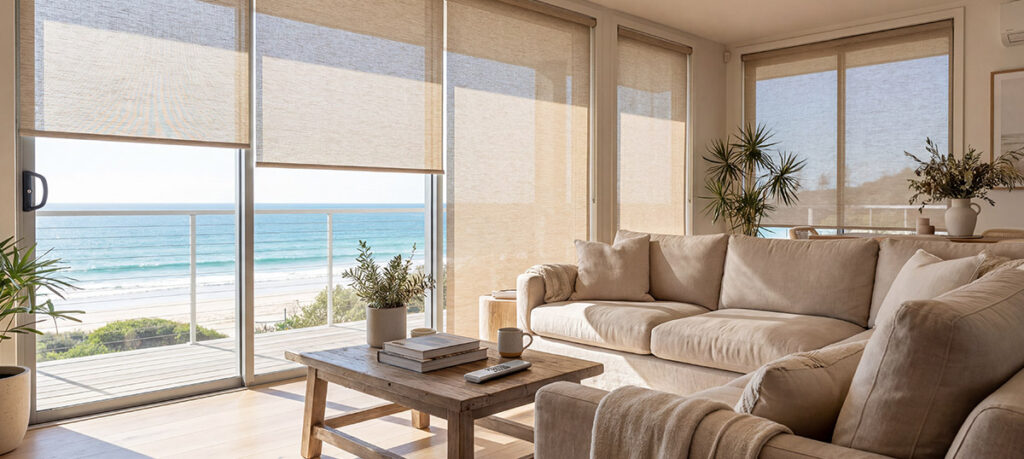
Living on the Queensland coast means dealing with breathtaking views and harsh, salt-laced air.
For many Sunshine Coast homeowners, the big question isn’t just about style — it’s about whether motorised blinds can actually handle the humidity and heat better than traditional options, and if they are truly worth the investment.
So, can modern upgrades hold up against the “salt air test,” or are motorised blinds just an expensive convenience? At iQ Shutters, we help locals navigate these choices to ensure their window coverings are as durable as they are stylish.
In this guide, we’ll break down:
- The Coastal Performance: How motorised systems stand up to Queensland’s unique humidity and glare.
- The Convenience Factor: Why automated scheduling is becoming a game-changer for home insulation.
- A Fair Comparison: Weighing the upfront costs and maintenance of motors against classic manual alternatives.
By the end, you’ll know exactly whether going electric is the right move for your coastal lifestyle or if a traditional approach still reigns supreme.
|
Motorised Blinds: A Smarter Way to Shape Coastal Light
Motorised roller blinds are becoming a favourite in coastal suburbs, and it’s easy to see why. There is something incredibly satisfying about controlling your sunlight, privacy, and airflow with a single tap.
By tucking a quiet, powerful motor inside the headbox, they ditch the messy chains for a look that’s as sleek as it is functional.
The real magic, though, is in the convenience. Whether you use a wall switch, a remote, or your smartphone, you can adjust your blinds without even leaving the lounge.
This is a lifesaver for those extra-wide windows, high-up glass, or spots where wind makes manual chains a tangled nightmare.
For those of us living in Queensland, these blinds do more than just look good—they actually work for you.
You can set them to close during the hottest part of the day, protecting your furniture from UV damage and keeping your home cool before you even walk through the door.
It’s a durable, high-tech solution that’s built to handle our humidity while making daily life just a little bit easier.
Why Motorised Control Elevates Coastal Living
Effortless Function for Busy Households
They remove manual handling, creating smooth daily routines for families juggling work, school, or irregular hours.
Remote or app-based adjustments limit strain on wrists and shoulders, particularly helpful for older residents or anyone managing mobility concerns.
Hard-to-reach windows above stair voids or behind furniture become easy to manage, reducing safety risks linked to stretching or climbing.
Enhanced Protection Against Coastal Conditions
Strong sun, humidity, and airborne salt particulates challenge window coverings across Sunshine Coast suburbs.
They help reduce prolonged heat transfer by lowering coverings automatically during peak temperatures, trimming cooling demands and promoting more stable indoor climates.
Automated shading can reduce solar heat gain by up to 30%, creating meaningful energy savings during hotter months.
Consistent positioning also maintains straighter fabric hangs, supporting longevity in environments where warping or puckering appear more often.
Improved Privacy Without Compromising Views
They let you adjust levels instantly, ensuring privacy during evenings without sacrificing morning light. Subtle mid-positions also give your home partial views while shielding interiors from passers-by.
Even better, timed settings create predictable comfort, useful in properties facing busy walkways or neighbouring balconies. Smooth transitions reduce disturbance, which is ideal for bedrooms and home offices.
Increased Safety Through Cord-Free Design
They eliminate dangling chains, improving safety around young children and pets. Queensland’s building guidelines strongly encourage cordless designs for this reason.
Removing physical controls also reduces mechanical wear, decreasing the chances of chain rust or breakage in high-humidity zones near beaches.
Value-Adding Convenience for Modern Homes
Integration with automation platforms means blinds respond to sun position, interior temperature, or occupant schedules. Homes with these systems often present as more future-ready, appealing to prospective buyers seeking enhanced convenience.
Where Motorised Systems May Fall Short
Higher Upfront Investment
Motorised blinds generally sit above manual options in cost due to motors, control modules, and specialised installation.
Pricing varies between widths, fabrics, and smart-home compatibility; however, increased component complexity pushes starting figures upward.
Potential for Technical Issues
Automation introduces electronics, meaning occasional faults may arise. Power surges, drained batteries, or motor wear can interrupt performance.
A small percentage of devices may require servicing within several years, especially in environments with salt-laden air.
Maintenance Considerations
They require basic upkeep. Coastal climates amplify this, as airborne salt accelerates corrosion on any unprotected metal surrounding the window zone.
Regular cleaning mitigates most issues, yet households must commit to periodic checks. Long-term neglect can contribute to stiff movement or fabric distortion.
Compatibility Limitations
Automation works best when integrated into appropriate wiring or stable wireless networks. Older homes may require extra electrical work to support preferred control styles.
| Aspect | Advantage | Limitation |
| Daily Use | Smooth, safe, convenient operation | Higher upfront outlay |
| Comfort | Better heat control, UV protection | Requires routine upkeep |
| Privacy | Instant adjustments, custom positions | Dependent on power or battery charge |
| Safety | Cord-free format improves child and pet safety | Potential motor or component faults |
| Property Appeal | Smart-home value and buyer interest | Compatibility requirements in older dwellings |
How Motorised Options Stack Up Against Common Alternatives
Manual Roller Blinds vs. Motorised Blinds
Manual roller blinds remain popular for simple operation and lower entry costs. That model relies on chains, which can corrode in salt-heavy air or create safety concerns for households with small children.
Motorised blinds avoid chain strain entirely through automated lift functions, delivering smoother transitions and cleaner lines.
Key Differences
Manual formats demand physical effort and frequent checks for fraying or rust, while this version offers hands-free control with consistent tension.
Larger spans also operate more evenly through automated lift mechanisms, reducing the puckering often seen in wide manual fabrics.
Zipscreens and Other Outdoor Awnings vs. Motorised Blinds
Zipscreens and external awnings excel in outdoor shading by blocking significant heat before it reaches the glass. That model suits patios or alfresco spaces but often requires more robust materials and regular cleaning to remove salt build-up.
Motorised blinds, meanwhile, focus on indoor comfort with streamlined appearance, quiet travel, and softer filtering options.
Key Differences
Outdoor formats create powerful solar barriers, whereas this solution enhances privacy, ambience, and convenience within living spaces. Both serve specific functions: one shields exterior zones, the other refines control inside rooms.
Plantation Shutters vs. Motorised Blinds
Plantation shutters offer exceptional durability and airflow management. Motorised blinds provide fixed framing with rotating louvres rather than upward motion.
While shutters resist Queensland humidity beautifully, their design suits architectural statements more than automated convenience.
Key Differences
Shutters deliver strong insulation and a timeless look; however, they lack the programmable adjustment schedules available through this configuration.
Motorised styles serve households prioritising flexible ambience and effortless daily use.
| Category | Motorised Roller Blind System | Manual Roller Blinds | Zipscreen / Awnings | Plantation Shutters |
| Operation | Automated, cordless, programmable | Chain-driven, hands-on | Manual or motorised, depending on setup | Louvres rotate manually |
| Ideal Use | Interior spaces needing flexible control | Budget-focused interior shading | Exterior sun management | Architectural statement, airflow |
| Durability in Coastal Areas | Good when maintained; minimal handling wear | Chain rust possible | Strong sun barrier; requires outdoor upkeep | Very strong structural resilience |
| Safety | Cord-free | Corded | Depends on style | Cord-free |
| Smart-Home Integration | Yes | No | Optional | No |
Key Takeaways
- Motor-driven fabrics support smoother routines through cordless, hands-free motion
- Automated positioning reduces heat gain and helps protect interiors from UV exposure
- Privacy control improves significantly with precise, instant adjustments
- Higher upfront investment may influence budget-conscious renovators
- Upkeep remains essential in salt-heavy regions to maintain a consistent glide
- Manual blinds, exterior awnings, and shutters each provide distinct benefits, yet none combine automation, safety, and flexibility in the same way
Households deciding between formats can consider tailored priorities:
- Families with young children or pets may value cordless safety and predictable performance.
- Homeowners with hard-to-reach windows gain smoother management through remote or app-based control.
- Energy-focused renovators benefit from reduced heat transfer during Queensland’s warmer months.
- Those favouring outdoor shading might still prefer Zipscreens or awnings for sun-blocking power outside the glass line.
- Fans of architectural aesthetics may lean toward shutters, valuing form and airflow over automation.
Ready to Start Your Next Project with Confidence?
At iQ Shutters, we know you value style and quality, which is why we prioritise clear communication from the first measurement to the final installation.
Our team is dedicated to helping you navigate fabrics, features, and timelines so you can upgrade your space without the guesswork.
Ready to see how custom blinds can elevate your home? Reach out to iQ Shutters today to discuss your vision, explore our latest range, and receive a detailed quote tailored to your unique needs.